


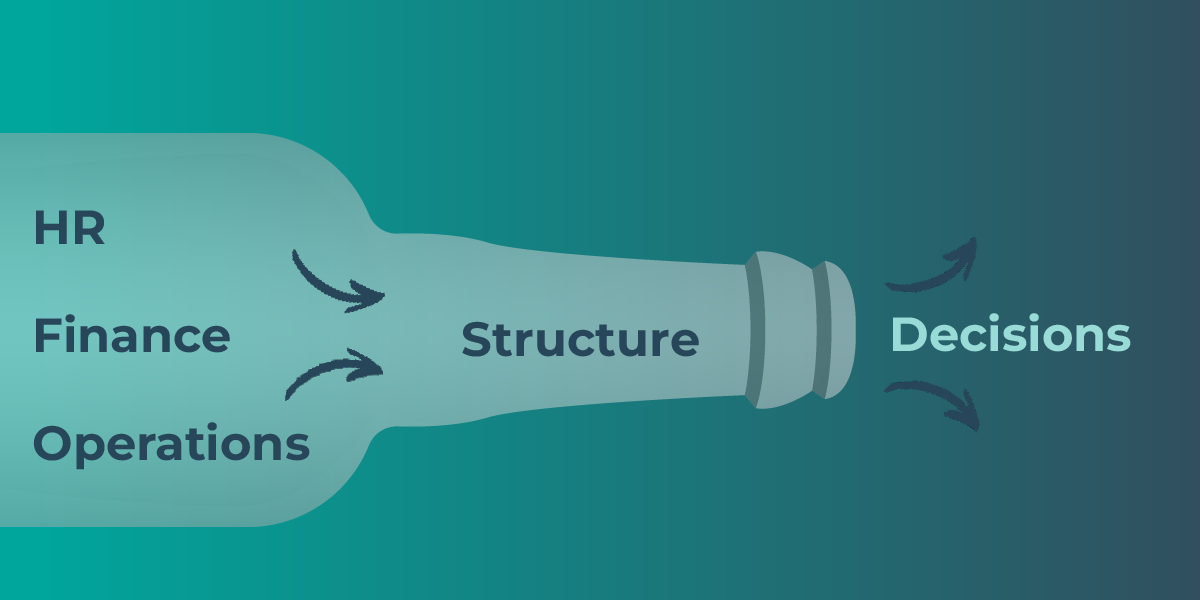
SUMMARY: Most healthcare organizations know where their staffing problems are. They know where capacity is limited, where decisions stall, and where costs rise faster than expected. Yet improvement often moves slowly. This post explains the structural friction inside organizations that prevents good insight from becoming better workforce outcomes.
Healthcare teams are not confused about where staffing problems exist. Leaders know which sites face ongoing shortages, which schedules rely too heavily on familiar providers, which gaps get escalated too quickly, and where external spend seems to grow regardless of effort. The challenge is not awareness. The challenge is movement.
Improvement does not happen automatically just because a problem is recognized. Workforce improvement requires coordinated change. And coordinated change is difficult inside systems that were never designed for alignment.
Most organizations do not have a staffing problem. They have a structural friction problem. This friction slows decisions, blurs ownership, and creates uncertainty about how to take action even when the path appears logical.
Understanding this friction is the first step to removing it.
Fragmented Ownership Slows Decisions
Workforce decisions span multiple functions: operations, scheduling, credentialing, HR, payroll, finance, and clinical leadership. Most organizations were not built with clear ownership across these boundaries.
This creates friction because:
- each team controls a different part of the staffing puzzle
- no single leader owns the full workforce journey
- decisions require coordination that feels slow and uncertain
- teams hesitate to act without cross functional confirmation
Even when the insight is correct, the structure surrounding the decision is not equipped to respond quickly. Ownership is diluted. That dilution becomes delay.
Data Lives In Different Places Than Decisions
Many organizations have made progress with data visibility, but the information still lives in different systems than the decisions it should influence.
This structural disconnect appears when:
- readiness data updates in one system while scheduling happens in another
- cost information appears after the decision, not before it
- utilization insight is separated from operational workflows
- teams do not share a unified staffing picture
When data and decisions live far apart, teams rely on habit or memory instead of current reality. Improvement becomes harder because clarity never arrives at the right moment.
Workflows Reflect Past Reality
Healthcare systems carry years of inherited workflow design. What once served the organization well may now slow it down.
Structural friction forms when:
- outdated scheduling templates continue to shape choices
- credentialing timelines do not align with deployment needs
- escalation paths assume shortages even when internal options exist
- workload distribution is based on historical assumptions
- cross site capacity is never fully integrated into the workflow
Operational structure acts like gravity. It keeps teams pulled toward the past unless something actively changes it.
Teams Optimize Locally Instead Of Collectively
When teams focus on their own segment of the workflow, they optimize for local efficiency rather than organizational outcomes.
This creates friction because:
- schedulers optimize for coverage
- finance optimizes for cost
- clinical leaders optimize for continuity
- HR optimizes for onboarding speed
- operations optimizes for workflow stability
Each team is making a reasonable choice in isolation. The friction emerges because the system is not aligned to make these reasonable choices add up to the best outcome.
Improvement requires a shared goal. Structural friction prevents that goal from forming.
Staffing Signals Move Slower Than Needs
Even in well run organizations, staffing signals flow slowly. Eligibility, readiness, updated capacity, burnout indicators, or new operational requirements often take days or weeks to reach the people who need the information most.
This creates circumstances where:
- internal options appear unavailable
- new hires are deployed later than they should be
- external labor fills gaps prematurely
- small scheduling challenges grow into expensive patterns
Structural friction prevents information from traveling at the speed of staffing decisions. That gap becomes a cost.
Why Structural Friction Matters Most
Most staffing problems are not created by one bad decision. They are created by hundreds of small decisions made inside a structure that slows, distorts, or complicates clarity.
Structural friction:
- makes improvement harder than it should be
- hides internal capacity even when it exists
- increases reliance on shortcuts and assumptions
- encourages reactivity instead of intentional planning
- drives preventable external spend
- contributes to burnout and instability
Leaders often try to fix problems with reminders, meetings, or process adjustments. But without addressing the underlying friction, the improvements fade.
How High Performing Organizations Reduce Friction
These organizations do not demand more effort from their teams. They redesign the environment so good decisions become easier to make. They reduce friction by:
- aligning operations and finance around a shared staffing picture
- mapping where decisions slow down and why
- connecting readiness and eligibility signals directly to scheduling
- defining ownership for each part of the workforce journey
- updating workflows based on current, not historical, needs
- replacing siloed assumptions with shared insight
The goal is not perfection. The goal is momentum. When structural friction declines, improvement accelerates naturally.
How Kimedics Helps Remove Structural Barriers
Kimedics reduces structural friction by bringing the entire workforce picture into one place. Instead of scattering insight across systems or teams, Kimedics consolidates readiness, eligibility, utilization, cost context, and scheduling in a unified operational environment.
With Kimedics, organizations can:
- eliminate blind spots across the staffing journey
- act on insight at the moment decisions are made
- reduce delays in deploying internal capacity
- identify structural blockers early
- align teams around a single operational and financial truth
- make improvement sustainable rather than episodic
When the structure becomes clearer, decisions become easier. When decisions become easier, outcomes improve. Kimedics helps organizations create the conditions where meaningful workforce improvement can actually take hold.
Ready to reduce structural friction and unlock better workforce outcomes?
Request a Demo
Learn more about Kimedics
Kimedics is a provider utilization management platform. We help healthcare organizations gain visibility across internal and external staffing to reduce complexity and improve financial performance. For more information, book a demo or email kimedics@kimedics.com