


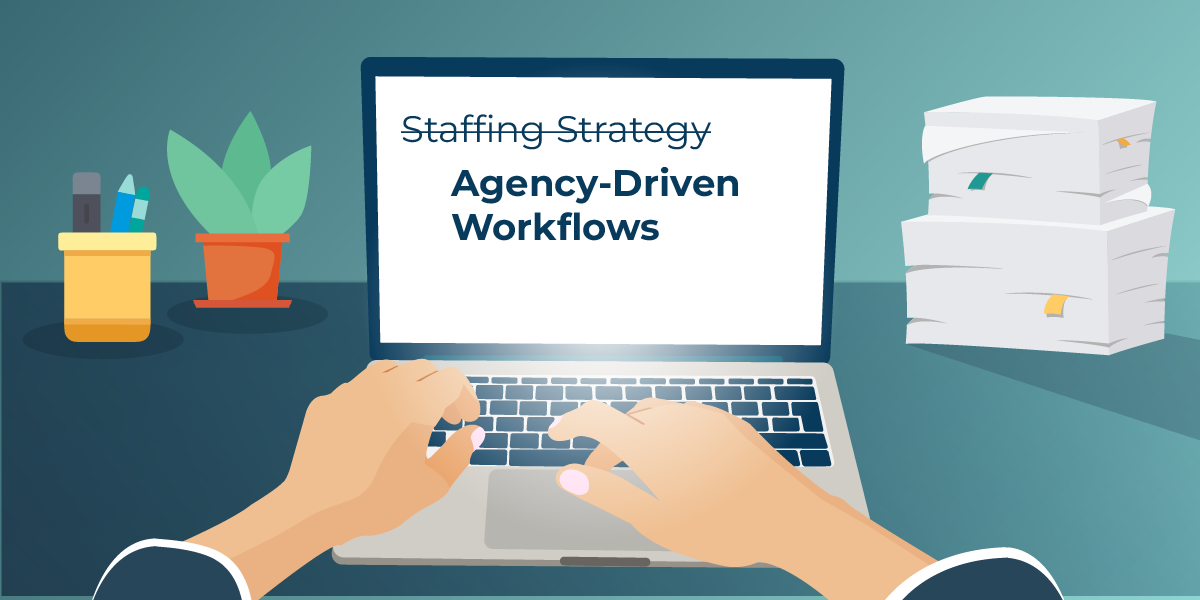
The Workforce Misdirection Series: How Healthcare Teams Lose Their Way and How to Get Back on Course (3 of 6)
SUMMARY: Most healthcare organizations don’t intentionally hand over pieces of their staffing strategy to agencies. It happens gradually, through convenience, routine, and workflow drift. What begins as a relationship built around a specific need (“We can’t cover this service line internally”) slowly expands until agencies shape:
- Which shifts get filled
- How quickly internal options are considered
- What rates feel “normal”
- How dependent the organization becomes on external labor
Agencies don’t do this maliciously. They simply optimize for what they are built to do: place clinicians as quickly and consistently as possible. When internal systems are fragmented or unclear, their workflows become the default. And that default quietly rewrites the staffing strategy leadership thinks they’re executing.
This post explains how this shift happens, why it’s hard to notice, and how organizations can regain control without losing flexibility.
1. When “Help” Becomes the Default Option
Agency relationships typically begin with a very real, very urgent need:
- A specialty with chronic shortages
- A new site or service line
- A provider departure
- Seasonal surges
- Internal coverage gaps that no one can fill
Agencies step in quickly and reliably. They solve the immediate crisis. Trust is built.
Over time, something subtle happens:
- Requests go to the agency before internal options are checked
- The agency becomes the “fastest fix”
- Schedulers reflexively send openings externally
- Internal capacity gets checked after the fact — or not at all
What started as an exception becomes the default workflow. The organization doesn’t “decide” to rely more on agencies. It slides into it because the internal alternative feels slower, more uncertain, or harder to manage.
2. Information Starts Flowing Through External Channels
When agencies become the primary workflow, they also become the primary source of information:
- Shift availability
- Candidate readiness
- Rate expectations
- Provider performance narratives
- Credentialing updates
- Assignment histories
The organization’s internal view becomes patchy. What leadership believes is happening may not match what schedulers or agencies are actually executing.
When key decisions depend on agency-provided visibility, the agency’s incentive structure quietly shapes internal behavior. Not intentionally but inevitably.
3. Rate Creep Happens Long Before Anyone Notices
Agency-driven workflows create a blind spot around rates.
It looks like this:
- A small premium is added for a “hard-to-fill” shift
- A slightly higher hourly rate is proposed because “the market moved”
- A one-time exception becomes a standard request
- A contract refresh introduces new clauses or minimums
- A provider “has other offers” that justify escalation
Individually, none of these decisions stand out. Collectively, they reset the organization’s sense of what’s normal.
By the time finance notices, the pattern is already established, and hard to unwind.
4. Internal Options Quietly Fall Out of the Conversation
This is one of the most costly unintended consequences. When agencies are fast, familiar, and responsive, internal options are considered later (or not at all) because:
- Availability is unclear
- Readiness is uncertain
- Providers haven’t updated preference patterns
- Cross-credentialing isn’t visible
- Newly onboarded clinicians aren’t in the right workflow
- Leaders don’t have a shared view of who can flex where
The result:
- Underutilized internal providers
- Overextended high performers
- More reliance on external coverage
- A belief that internal capacity “doesn’t exist”
Internal supply hasn’t disappeared. It’s just hidden behind workflow friction.
5. Agencies Begin Shaping the Staffing Mix
Over time, agency workflows determine:
- Which specialties rely heavily on external providers
- Which shifts consistently go unfilled internally
- What the internal workforce is “expected” to cover
- When leaders escalate staffing issues
- How creative teams become in exploring internal coverage
The organization’s staffing strategy is no longer built on:
- Capacity
- Cost
- Workload
- Sustainability
- Provider engagement
- Organizational goals
It’s built on momentum. And momentum favors the path of least resistance.
6. Regaining Control Without Losing Flexibility
The solution is not to minimize or replace agencies. It’s to rebalance the relationship so internal strategy drives decisions, not workflow inertia. High-performing organizations do this by:
A. Viewing Internal and External Options Side by Side
- So schedulers see internal capacity before defaulting externally.
B. Tracking Agency Performance Transparently
- Rates, reliability, credentialing speed, and fulfillment patterns are visible and comparable.
C. Making Internal Capacity Easy to See and Easy to Use
- No more digging for availability, eligibility, or cross-credentialing data.
D. Setting Intentional Targets for External Reliance
- Not banning agencies but calibrating their role.
E. Creating a Shared System for All Stakeholders
- Finance, operations, clinical leadership, and staffing teams see the same picture when decisions are made.
When internal clarity improves, external partners become tools, not drivers.
How Kimedics Helps
Kimedics gives healthcare organizations a connected view of internal and external staffing, so leaders can stay in control of how agencies fit into their workforce strategy.
With Kimedics, teams can:
- Compare internal and external options instantly
- Track agency usage and performance
- Identify where agencies are essential vs. habitual
- Reduce rate creep through transparency
- Improve internal utilization before going external
- Align finance, operations, and clinical teams on the staffing mix
When organizations see the full picture, agencies support strategy instead of shaping it.
Want to understand where agencies truly fit in your staffing strategy?
Request a Demo
Learn more about Kimedics
Kimedics is a provider utilization management solution. We help healthcare organizations reduce scheduling complexity. For more information, book a demo or email kimedics@kimedics.com