


SUMMARY: Most organizations assume they understand their internal staffing capacity, but the reality inside daily operations tells a different story. This post explains why internal supply is often overestimated or understated, how those gaps distort staffing decisions, and what high performing teams do to maintain an accurate picture of real available resources.
Healthcare leaders often think internal supply is the most stable part of the staffing equation. They know how many providers they employ, where they work, and what the schedule requires. On paper, internal supply looks fixed and predictable.
In practice, it behaves like a moving target.
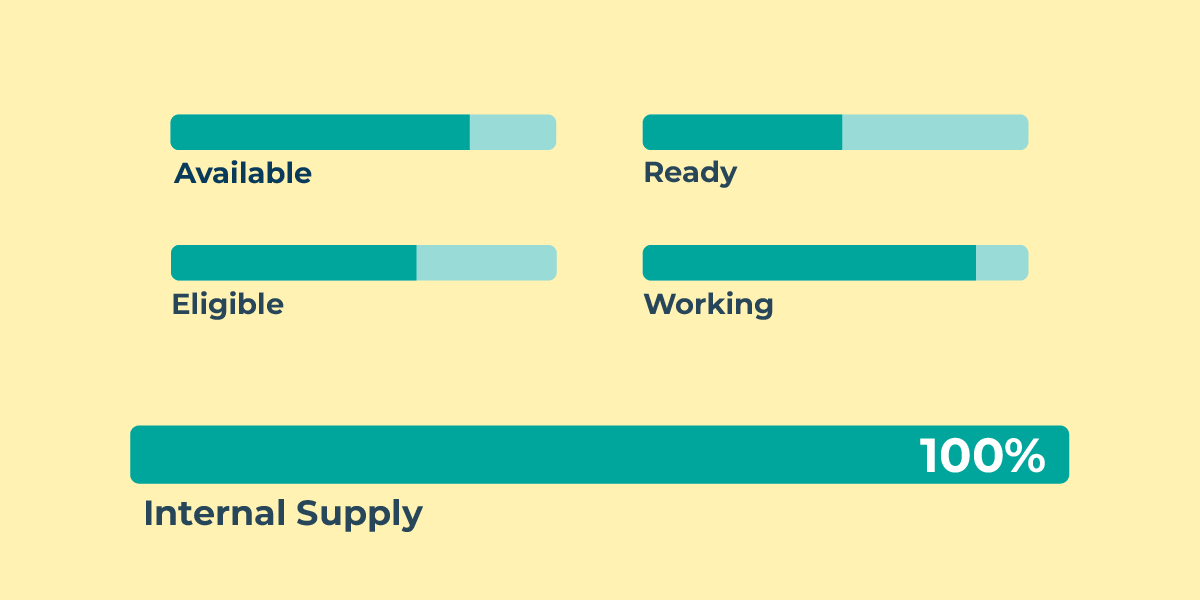
Availability shifts. Eligibility changes. Workload balance fluctuates. Providers drift into underuse or overuse. Readiness signals arrive late. New hires become technically active long before they appear in scheduling models. Systems do not always agree on who can work where, or when.
The result is a simple but costly reality. The organization thinks it has one level of internal supply, but operates with another.
This invisible mismatch influences every major staffing decision.
Why Internal Supply Appears Clearer Than It Is
Internal supply seems straightforward because it is familiar. Leaders know their clinicians. Schedulers know their patterns. Operations knows their rotations and tendencies. Familiarity creates the illusion of clarity.
But internal supply is affected by many small shifts that rarely get updated in a centralized way.
Common sources of mismatch include:
- outdated availability that no one revisits
- eligibility data not fully reflected in scheduling tools
- new hires not visible in operational workflows
- underutilized providers not flagged or redeployed
- variations in workload that do not appear in templates
- readiness signals that reach teams at different times
These small distortions add up. They change the supply picture without anyone noticing the moment it happens.
How Supply Misunderstanding Distorts Staffing Decisions
When internal supply is unclear, teams make decisions based on perceived constraints rather than real constraints.
Common effects include:
- recurring use of external labor when internal options existed
- habitual overtime among the same set of providers
- patterns of imbalance that lead to early burnout
- uneven distribution of nights, weekends, or call
- delayed deployment of new providers
- misalignment between operations and finance on why spend increased
The organization starts solving the wrong problem. What appears to be understaffing may actually be underutilization. What appears to be a coverage crisis may begin with missing or incomplete supply data.
Why Organizations Struggle To Keep Supply Accurate
Maintaining a clear picture of internal supply is difficult for one reason: it lives across multiple systems and teams.
No single platform shows:
- current eligibility
- cross site capability
- live readiness
- real workload balance
- actual deployment versus theoretical deployment
Instead, leaders and schedulers assemble the picture from pieces. That takes time and is often inconsistent. The more complex the workforce, the harder it becomes to maintain a unified view without systemic support. High performing organizations recognize that internal supply is not something to memorize or approximate. It is something to maintain continuously.
What Accurate Internal Supply Enables
When the picture of internal supply is aligned across teams, the benefits are immediate.
Organizations gain:
- clearer decision making under pressure
- fewer avoidable external requests
- better distribution of workload across providers
- earlier detection of imbalance or drift
- faster onboarding to deployment cycles
- tighter alignment between scheduling, operations, and finance
The result is not just better schedules. It is a more stable workforce. Accurate supply visibility restores confidence in planning and reduces the reactive posture that drains resources and increases burnout.
How Kimedics Creates A Unified View Of Internal Supply
Kimedics brings together the signals that shape internal supply so leaders do not have to chase information across systems.
With Kimedics, teams can:
- see readiness, eligibility, utilization, and scheduling in one view
- identify underused providers and redeploy them appropriately
- surface new hires the moment they become deployable
- monitor workload balance across all sites and teams
- understand internal versus external mix in real time
- align financial expectations with operational reality
Internal supply becomes clearer, more accurate, and more actionable. That clarity prevents unnecessary spend and enables staffing decisions that match real workforce conditions.
Ready to gain a clearer picture of your internal supply and reduce avoidable staffing costs?
Request a Demo
Learn more about Kimedics
Kimedics is a provider utilization management platform. We help healthcare organizations gain visibility across internal and external staffing to reduce complexity and improve financial performance. For more information, book a demo or email kimedics@kimedics.com