


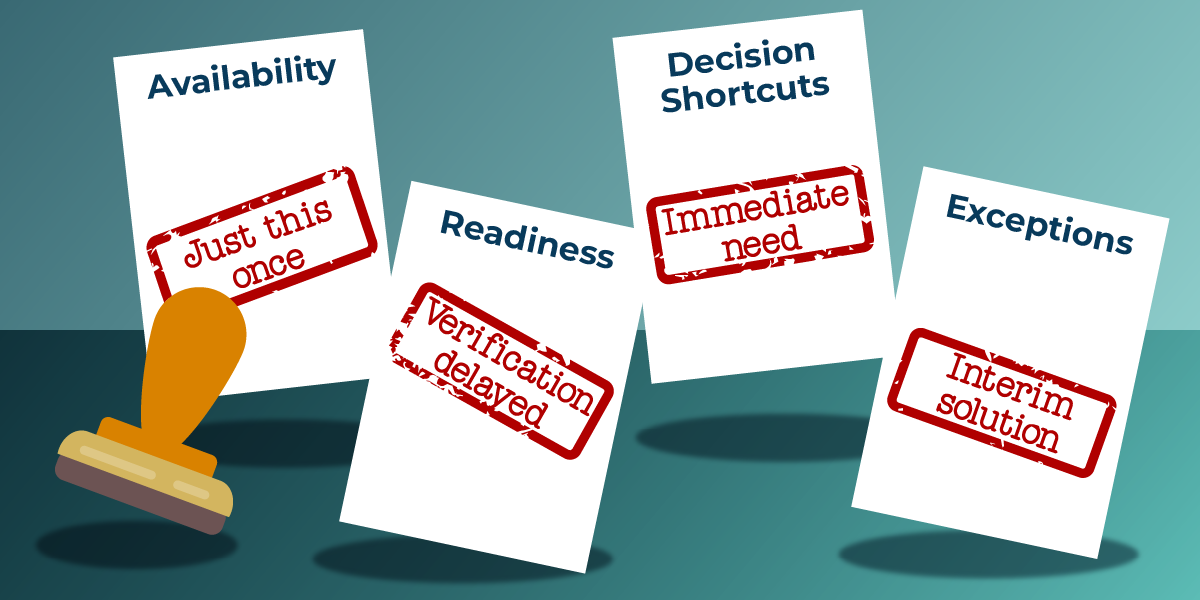
SUMMARY: When most healthcare leaders think about staffing costs, they picture big decisions: hiring, contract negotiations, overtime policies, locum usage, or provider compensation. But in reality, the most expensive problems don’t come from major decisions. This post explains how silent drift happens, why it’s so costly, and how healthcare organizations can finally bring it under control.
It Starts to Add Up
They come from micro-decisions. These are the small, daily scheduling choices that quietly move an organization off course.
- One missed update.
- One unlogged availability change.
- One provider habitually filling certain shifts.
- One agency covering a single gap “just this once.”
- One misalignment between operations and finance.
Individually, these seem harmless. Collectively, they create what we call silent drift. It's the slow, unnoticed misalignment that leads to overspend, burnout, and operational instability.
What Is Silent Drift?
Silent drift is the gradual widening of the gap between how staffing should work and how it actually works.
It’s not a crisis. It’s not a dramatic failure. It’s the accumulation of small inefficiencies that add up over weeks, months, and years.
Silent drift shows up as:
- Slightly higher reliance on external coverage
- Subtle increases in provider burnout
- Gradual underutilization of certain clinicians
- Growing variance in cost-per-shift
- Forecasting models that feel “off,” but no one can explain why
- Teams feeling like they’re always reacting, never anticipating
It’s not one big mistake. It’s a thousand small ones.
Where Silent Drift Comes From
Silent drift doesn’t appear overnight. It emerges from routine day-to-day decisions and workflow gaps that seem inconsequential in the moment. Here are the most common sources:
1. Small Availability Errors That Compound
- A provider forgets to update their availability.
- A scheduler misses an email.
- A last-minute PTO change never gets logged.
2. Small Exceptions That Become Patterns
- “Let’s just call the agency this one time.”
- “We’ll fix this next month.”
- “This provider always takes these shifts anyway.”
What starts as an exception becomes the baseline.
3. Credentialing and Readiness Lag
If readiness isn’t updated in real time, schedulers assume a provider can’t work. They fill with locums instead. They even do this when the provider is technically ready. A multi-week credentialing delay becomes a multi-quarter financial problem.
4. Misaligned Operating Assumptions
- Finance sees overspend.
- Operations sees coverage gaps.
- Clinicians see burnout.
Each group works from partial truth, and decisions drift out of sync.
5. Invisible Cost Variance
- Schedulers can’t see cost-per-shift.
- Finance can’t see scheduling rationale.
- Operations can’t see how minor changes affect monthly totals.
Small changes accumulate into major variances.
6. Agency Convenience
Most agency workflows are built for speed, not efficiency. When internal data is unclear, external coverage becomes the easy button.
Convenience is expensive.
Why Silent Drift Is So Costly
Silent drift feels invisible in the moment — but the financial impact is very real.
Here’s where organizations pay for it:
- Hidden Locum Overuse: A handful of extra locum shifts per week can translate into hundreds of thousands per year.
- Underutilized Internal Providers: When some clinicians are under-scheduled, the organization pays for capacity it isn’t using.
- Burnout in High Performers: Drift leads to uneven workload, which drives burnout, turnover, and coverage gaps.
- Budget Variance That Seems Unexplained: Small inefficiencies across multiple sites or specialties make budget forecasting less accurate and harder to defend.
- Poor Forecasting Inputs: If foundational data is even slightly off, forecasting is always off.
How High-Performing Organizations Stop the Drift
The solution to silent drift isn’t dramatic restructuring. It’s connected visibility and consistent workflows.
Here’s how high-performing teams prevent drift before it begins.
1. Bring All Provider Data Into One System
- Availability
- Eligibility
- Credentialing
- Readiness
- Utilization
- Cost
When everything is connected, drift becomes visible.
2. Use Real-Time Updates to Avoid Lag
- If availability or readiness updates lag, drift accelerates.
- Live updates keep decisions aligned with reality.
3. Align Finance, Operations, and Clinical Leadership
- When everyone sees the same data, drift has nowhere to hide.
- Teams move together instead of in parallel.
4. Standardize Exceptions
- Exceptions aren’t bad. Untracked exceptions are.
5. Evaluate Small Variances Before They Grow
High performers monitor:
- Weekly locum usage
- Weekly internal utilization
- Micro-trends in shift distribution
- Early patterns in agency submissions
What’s caught early can be corrected early.
How Kimedics Helps Organizations Stay on Course
Kimedics eliminates silent drift by giving leaders complete visibility into the micro-patterns that compound into major costs.
With Kimedics, teams can:
- Track internal vs. external mix in real time
- See micro-variances in coverage and cost-per-shift
- Flag underutilized providers before it becomes a trend
- Identify repetitive agency usage patterns
- Connect scheduling and cost data at the decision point
- Update readiness and availability instantly
- Forecast with complete inputs, not partial ones
Drift disappears when the whole staffing system operates on shared truth.
Drift Happens Slowly, Until the Cost Hits Fast
- The biggest financial problems rarely come from big decisions.
- They come from the hundreds of small decisions no one sees.
- Silent drift is the hidden tax on healthcare staffing.
- But it’s 100% preventable with connected data and aligned teams.
That’s what Total Staffing Intelligence was built to do.
Ready to stop silent drift in your staffing strategy?
Request a Demo
Learn more about Kimedics
Kimedics is a provider utilization management solution. We help healthcare organizations reduce scheduling complexity. For more information, book a demo or email kimedics@kimedics.com